Combustion Testing

Combustion Testing is a professional test that evaluates the combustion characteristics of materials, products or components (such as flammability, flame spread rate, smoke yield, heat release rate, etc.) by simulating various combustion conditions. It aims to ensure product safety in use, comply with regulatory requirements, and provide data support for fire prevention and control. It covers multiple industries including construction, transportation, textiles, electronics and furniture, serving as a vital tool for product compliance and risk control.


Testing priorities vary for different products, with core indicators listed as follows:


  • Ignitability: The ease with which a material can be ignited (e.g., minimum ignition temperature, ignition time);

  • Flame Spread: The diffusion speed of flame over material surfaces or between components (e.g., vertical / horizontal burning rate);

  • Burning Duration: The length of time a material keeps burning after ignition, or its self-extinguishing capacity;

  • Smoke Generation Characteristics: Smoke concentration, light transmittance and smoke production rate during combustion (affecting visibility and evacuation in fires);

  • Heat Release Rate: Heat released per unit time (for evaluating fire growth rate, such as peak heat release rate);

  • Toxic Gases: Types and concentrations of harmful gases generated by combustion (e.g., CO, HCl, cyanides), which endanger human health and escape safety;

  • Residue Characteristics: Whether ashes and molten drips after combustion are ignitable (e.g., whether plastic burning drips can ignite underlying materials).

Scope of Application
  • Building Materials: wall materials, floor boards, ceiling panels, thermal insulation materials, fire retardant coatings, cables;

  • Transportation Vehicles: interior parts of automobiles / aircraft / rail transit (seats, carpets, plastic components, fabrics), exterior structural parts;

  • Textiles and Furniture: curtains, bedding, sofa fabrics, mattresses, children’s products;

  • Electronic and Electrical Products: wires and cables, plastic housings, batteries, circuit boards;

  • Packaging Materials: paper packaging, plastic films, cushioning materials.

Relevant Standards

1. Building Materials and Components

  • EN 13501-1 (EU): Standard for classification of construction products based on fire performance. Materials are classified into A1 (non-combustible), A2 (limited combustibility, low smoke production), B, C, D, E and F through combustion tests. It also evaluates smoke toxicity (S1-S3) and burning droplets (d0-d2);

  • ASTM E84 (USA): "Standard Test Method for Surface Burning Characteristics". A tunnel furnace test is adopted to measure the Flame Spread Index (FSI) and Smoke Developed Index (SDI) of materials for classification of wall, ceiling and other materials (e.g., Class A, B, C);

  • GB/T 8624 (China): Classification standard for fire performance of building materials, equivalent to EN 13501. It divides materials into Grade A (non-combustible), B1 (hardly combustible), B2 (combustible) and B3 (highly combustible);

  • ISO 5660-1: Standard for heat release rate testing. A cone calorimeter is used to measure key parameters such as heat release rate and smoke production during material combustion, widely applied in scientific research and product development.

2. Textiles and Furniture

  • GB 17927 (China): Fire performance test standard for upholstered furniture, applicable to sofas, mattresses and other products, to assess their combustion behavior after being ignited by cigarettes or small flames;

  • EN 1021-1/2 (EU): Combustion test standard for upholstered furniture materials, covering two ignition scenarios: cigarette ignition and small flame ignition;

  • ASTM D6413 (USA): Vertical flammability test for textiles, used to evaluate flame spread, afterflame and afterglow time of fabrics upon ignition;

  • 16 CFR 1610 (USA): Flammability standard for apparel textiles, classified into Class 1 (safest, mandatory for children’s clothing), Class 2 and Class 3 based on burning rate.

3. Electronics and Plastics

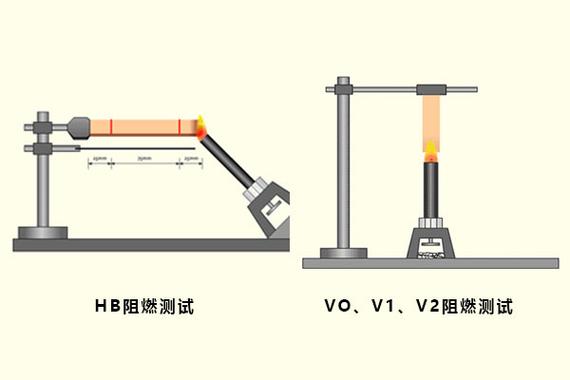
  • UL 94 (USA): Flammability classification test for plastic materials. Vertical / horizontal combustion tests classify materials into V0, V1, V2, HB, 5VA, 5VB and other grades (Grade V0 requires short burning time and no ignitable drips);

  • IEC 60695 (International Electrotechnical Commission): Fire hazard test standard for electrical equipment, including glow wire test, needle flame test, etc., to assess material resistance to ignition;

  • EN 60332 (EU): Vertical combustion test standard for electric wires and cables, evaluating whether flame spreads along the cable length after ignition.

4. Transportation Vehicles

  • FMVSS 302 (USA): Flammability test standard for automotive interior materials, requiring a material burning rate no higher than 100 mm/min (from ignition point to the 102 mm marking line);

  • ISO 3795: Horizontal combustion test standard for automotive interior materials, a globally recognized standard similar to FMVSS 302;

  • EN 45545 (EU): Fire protection test standard for railway vehicle materials. Different combustion, smoke and toxicity requirements are specified based on vehicle types (e.g., high-speed rail, metro) and material locations (e.g., interior parts, structural components).

Service Process

(Taking UL 94 Vertical Burning Test for Plastics as an example)

Sample Preparation: Cut 5 test specimens in accordance with the standard (normally 127mm×12.7mm× thickness), and condition the specimens for 48 hours under controlled conditions (temperature: 23℃±2℃, humidity: 50%±5%);

Test Setup: Fix the specimen vertically, and place absorbent cotton 300mm below it (to assess whether drips cause ignition);

Ignition and Observation: Apply a 20mm-high flame to the bottom of the specimen for 10 seconds, then remove the flame and record the afterflame time. If the specimen extinguishes, reapply the flame for another 10 seconds, and record the second afterflame time as well as the afterglow time;

Rating Criteria:

Class V0: Total afterflame time for two ignitions ≤10 seconds, no ignition of absorbent cotton, and no flame spread to the top of the specimen;

Class V1: Total afterflame time for two ignitions ≤30 seconds, with all other requirements identical to Class V0;

Class V2: Drips that ignite the absorbent cotton are permitted, with all other requirements identical to Class V1.


FAQ
 
Our Advantages
Authoritative Qualifications

HWD | HuaWayDa is a comprehensive third-party service institution integrating inspection, testing, metrology, certification, training and enterprise technical services. It consists of Management Center, Marketing & Customer Service Center, Laboratory, Certification Center, Management Institute, Sustainable Development Center and Enterprise Service Center, and is committed to providing customers with professional, efficient and authoritative one-stop enterprise solutions.

HWD | HuaWayDa holds CNCA approval certificate, CMA qualification, measurement standard assessment certificate, CNAS accreditation and other relevant qualifications.

We strive to build long-term and mutually trustful partnerships with clients. We are not merely a service provider for your current projects, but also a reliable think tank and companion on your journey to pursue excellent management.

Choosing us means you are not only selecting a service, but also a long-term partner rooted in professionalism with your success as our mission. We promise to help you build a solid management foundation and sustainable competitive advantages with our professional capabilities.

Submit Your Requirements Now
Our expert team provides high-quality solutions for you
Related Downloads

Tel:021-6409 0330
         13917723034

Email:info@huawayda.com

© Copyright Huaweida Testing & Certification (Shanghai) Co., Ltd. All Rights Reserved ICP Filing/License No.: 16029900-1