Reliability certification refers to a process in which an authoritative third-party organization conducts scientific testing, evaluation and audit in accordance with relevant standards to verify and certify that a product/system can stably perform its functions under specified conditions and within a given period, with the goals of risk reduction and competitiveness improvement.
It delivers remarkable value: enterprises can identify product defects, obtain authoritative endorsement and break trade barriers through certification; end-users can avoid inferior products and guarantee safety with certified goods; the whole industry can boost healthy competition based on such standards. Its core tests fall into four categories: environmental reliability testing to evaluate stability under extreme environments, lifespan reliability testing to assess durability, performance reliability testing to ensure consistent technical indicators, and safety reliability testing to prevent accidents caused by malfunctions.
Three tiers of standard systems are available: international standards (e.g., IEC, ISO standards), national/regional standards (e.g., China GB/T standards, EU CE harmonized standards), and industry-specific standards (e.g., aerospace MIL-STD standards). The certification process consists of five steps: application, sample submission for testing, factory audit (if required), result judgment and certificate issuance, and follow-up supervision & maintenance.
It differs from quality certification: reliability certification is a result-based certification targeting the actual service performance of products, while quality certification focuses on auditing an enterprise’s quality management processes; the two types of certification are usually used in combination. Reliability certification often serves as a mandatory entry threshold for sectors with stringent stability and safety requirements, including electronics & electrical appliances, automotive equipment, industrial machinery, medical devices, aerospace and more.
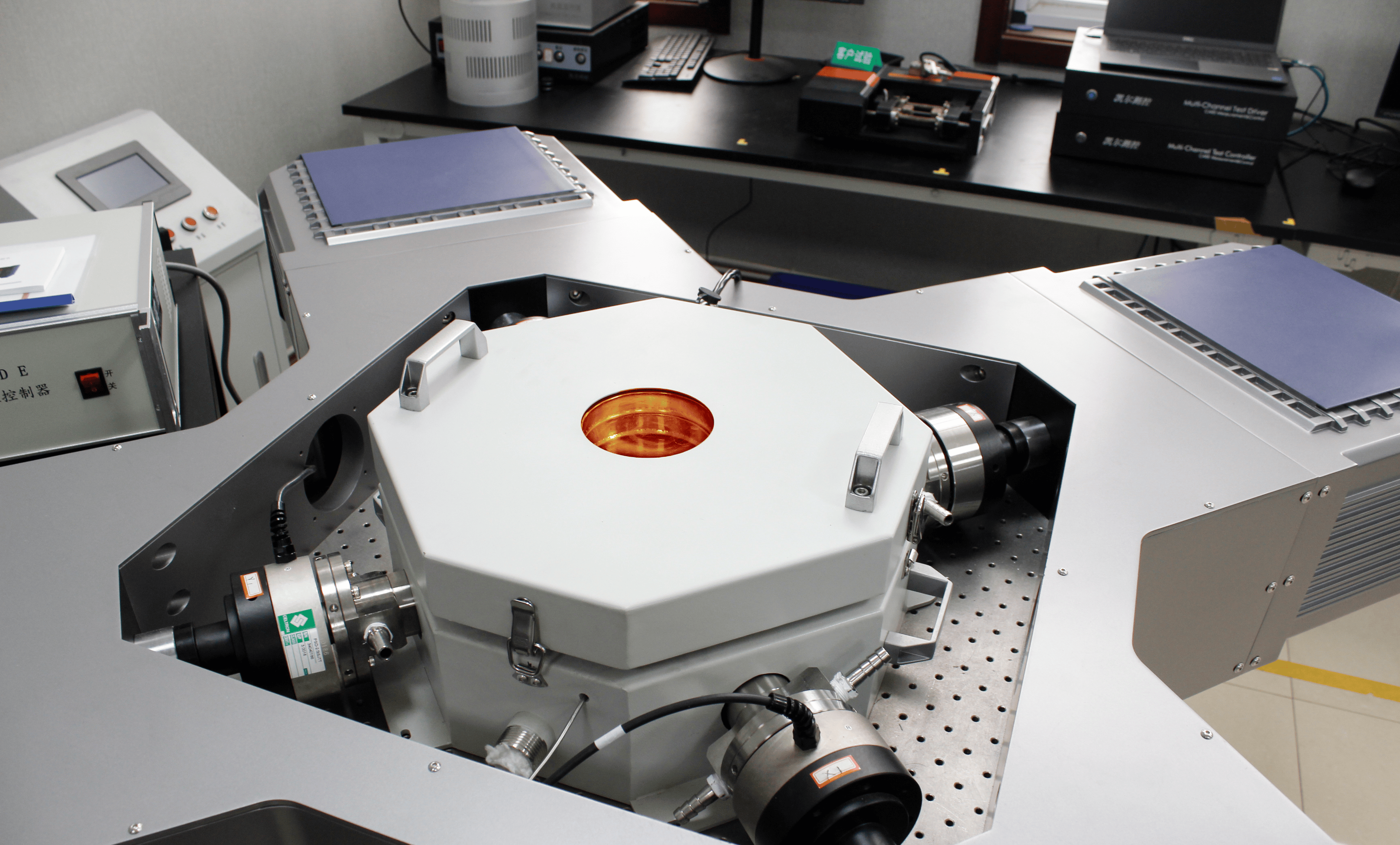
HuaWayDa offers a full range of certification programs with a professional audit team, capable of providing reliability certification at wafer, product, system and packaging levels. Equipped with comprehensive testing instruments, we deliver automotive electronic certification complying with AEC-Q100/101/102/104 standards and mass production services for ICs, power devices and system components.
Our testing scope includes High Temperature Operating Life (HTOL), BLT, Early Life Failure Rate (ELFR), Biased Highly Accelerated Stress Test (BHAST), THB, HTSL, HTRB/HTGB, H3TRB, IOL, Power Cycling, Temperature Cycling (TC), board-level TC, PCT, Pre-conditioning, solderability resistance testing, SAT, Drop Test, Vibration Test, EMC testing, as well as complete sets of automotive-grade reliability certification services.

| Test Category | Core Purpose | Typical Test Items | Applicable Products & Scenarios |
| Environmental Reliability Test | Verify the functional stability of products under extreme / complex environments | Temperature & Humidity Cycling Test, Humidity Test, Salt Spray Corrosion Test, Vibration Test | Outdoor equipment (e.g. surveillance cameras), automotive components, aerospace equipment |
| Lifetime Reliability Test | Evaluate long-term durability of products and determine Mean Time Between Failures (MTBF) | Accelerated Life Test (ALT), Continuous Power-on Test, Mechanical FatigueTest | Electronic and electrical products (e.g. mobile phones, home appliances), industrial machine tools, batteries |
| Performance Reliability Test | Confirm that product performance indicators will not deviate from design requirements during usage | Voltage Fluctuation Test, Load Variation Test, Signal Stability Test | Power supply equipment, communication equipment, precision instruments |
| Safety Reliability Test | Prevent safety accidents such as fire and electric leakage when product malfunctions | Overload Protection Test, Short-circuit Test, Dielectric Strength Test | Household appliances, electrical products, medical devices |
| Difference Item | Reliability Certification | Quality Certification (Taking ISO 9001 as an Example) |
| Core Object | The actual service performance of products / systems (whether they can work stably) | The enterprise’s quality management processes (whether standardized quality control procedures are available) |
| Evaluation Method | Centered on test data (such as MTBF, failure rate) | Centered on document review (such as quality manuals, process records) |
| Result Manifestation | The product obtains a certification certificate / mark to prove that "the product itself is reliable" | The enterprise obtains a system certificate to prove "the enterprise is capable of producing qualified products" |
| Application Scenarios | Directly oriented to end users / purchasers to verify the product’s performance stability | For internal enterprise management improvement, or as a basic requirement for supply chain cooperation |
※ Reliability certification is "certification of results", while quality certification is "certification of processes". The two usually need to be combined (for example, an enterprise first obtains ISO 9001 certification and then applies for reliability certification for its products) so as to fully guarantee product quality.
Electronic and Electrical Products: mobile phones, computers, household appliances (refrigerators / air conditioners), power adapters — high and low temperature tests and lifespan tests are required to prevent crash and damage during service;
Automobiles and Auto Parts: engine control units, vehicle display screens, batteries — products must withstand high temperatures (engine compartment) and vibration (driving conditions) to guarantee driving safety;
Industrial Equipment: machine tools, sensors, PLC controllers — stable long-term operation is demanded under harsh factory conditions (dust, voltage fluctuation) to avoid production line shutdown;
Medical Devices: ventilators, electrocardiographs, blood glucose meters — reliability is directly linked to patients’ lives, so rigorous environmental tests and fail-safe tests are mandatory;
Aerospace & Military Products: satellite components, missile control systems, military radars — "zero failure" performance is required under extreme environments (vacuum, drastic temperature variation, strong radiation), subject to the strictest standards.
1. International Standards (Wide Versatility):
IEC Standards (International Electrotechnical Commission): e.g. IEC 61508 (Functional safety of electrical/electronic/programmable electronic safety-related systems), applicable to industrial control, automotive electronics and other fields;
ISO Standards (International Organization for Standardization): e.g. ISO 16750 (Road vehicles — Environmental conditions and testing for electrical and electronic equipment), which specifies dedicated reliability requirements for auto parts.
2. National / Regional Standards (Mandatory for Regional Market Access):
China: GB/T standards (e.g. GB/T 2423 Environmental testing for electric and electronic products), the fundamental basis for domestic product reliability certification;
EU: Harmonized standards under CE certification (e.g. EN 60068 environmental testing standard), compliance is required to gain access to the EU market;
North America: UL standards (e.g. UL 1950 Safety standard for information technology equipment) and CSA standards, focusing on the integration of product safety and reliability.
3. Industry-Specific Standards (Exclusive for Segmented Industries):
Aerospace: MIL-STD (United States Military Standards, e.g. MIL-STD-883H Test methods and procedures for microelectronic devices) with extremely stringent reliability requirements;
Medical Devices: ISO 13485 (Medical devices quality management system) plus IEC 60601 (General requirements for the safety of medical electrical equipment); both quality management system and reliability testing shall be satisfied simultaneously;
Automotive: IATF 16949 (Quality management system standard for automotive industry), paired with test standards including ISO 16750, covering complete vehicles and all auto components.
Certification Application: Enterprises submit applications to our institution, along with documents including product drawings, technical specifications and production process flows;
Sample Submission for Testing: Samples are designated by the institution or randomly selected by the enterprise and delivered to the laboratory for reliability tests (such as high-low temperature, lifespan and vibration tests). The testing cycle ranges from several days to months depending on product complexity;
Factory Audit (If Required): For products related to production processes (such as household appliances and auto parts), our institution audits the enterprise's production workshops and quality management system (e.g. availability of process control documents and fault tracing mechanisms) to verify mass production capacity and consistency with test samples;
Certification Evaluation and Certificate Issuance: If tests and factory audit are passed, the institution will issue a test report and reliability certification certificate. In case of failure, the enterprise shall carry out rectification (such as design optimization and production process improvement) before retesting or re-audit;
Supervision and Maintenance: Certification certificates are generally valid for a fixed term. Annual surveillance activities (including sampling retests and unannounced factory inspections) will be conducted during the validity period to ensure continuous product compliance with relevant standards. The certificate may be suspended or revoked if non-compliance is identified.
HWD | HuaWayDa is a comprehensive third-party service institution integrating inspection, testing, metrology, certification, training and enterprise technical services. It consists of Management Center, Marketing & Customer Service Center, Laboratory, Certification Center, Management Institute, Sustainable Development Center and Enterprise Service Center, and is committed to providing customers with professional, efficient and authoritative one-stop enterprise solutions.
HWD | HuaWayDa holds CNCA approval certificate, CMA qualification, measurement standard assessment certificate, CNAS accreditation and other relevant qualifications.
We strive to build long-term and mutually trustful partnerships with clients. We are not merely a service provider for your current projects, but also a reliable think tank and companion on your journey to pursue excellent management.
Choosing us means you are not only selecting a service, but also a long-term partner rooted in professionalism with your success as our mission. We promise to help you build a solid management foundation and sustainable competitive advantages with our professional capabilities.

Tel:021-6409 0330
13917723034
Email:info@huawayda.com